
Tag: COLLECTPlusElectronic CommunicationsPatient BillingPatient Engagementpayment portalQR CodesText Services
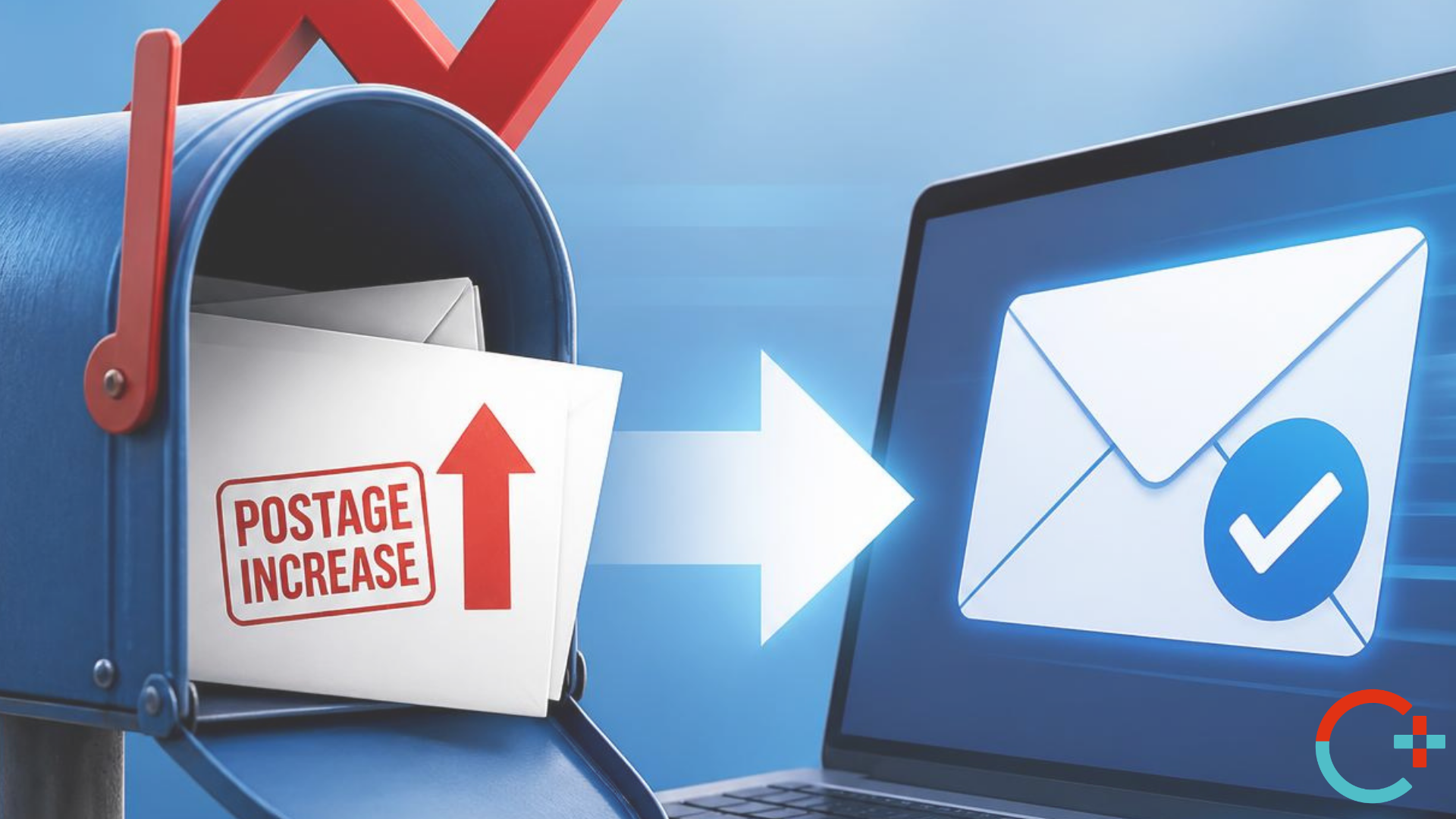
Reading Time: 3 minutesThe USPS has approved a $0.04 increase in first-class postage for presorted and automated mailings, effective July 12, 2026.
Although postage increases may seem incremental, the costs add up quickly for healthcare providers mailing hundreds or thousands of patient statements each month. Combined with the rising costs of paper, envelopes, printing, and processing, relying primarily on mailed statements is becoming increasingly expensive.
Now is the time to strengthen the electronic communication strategy.
Electronic Communication Is More Than a Cost-Saving Tool
Electronic communication can reduce dependence on paper statements, but its value goes far beyond postage savings. Email, text messages, automated reminder calls, and online payment options give patients more opportunities to receive billing information and take action.
These touchpoints can help:
Electronic engagement does not necessarily mean eliminating paper for every patient. It means using lower-cost digital channels whenever possible and reserving mailed statements for patients who need or prefer them.
Effective Electronic Engagement Starts with Accurate Patient Data
The success of any electronic communication strategy depends on the quality of the contact information being collected.
A missing email address or outdated mobile number prevents patients from receiving timely billing communications. It also limits your ability to use eDelivery, text reminders, payment links, and automated calls effectively.
Healthcare providers should make collecting and verifying contact information a standard part of patient intake and account maintenance. Important information includes:
Staff should also confirm this information during future interactions rather than assuming existing account information is still accurate. A simple question such as, “Is this still the best email address and mobile number for billing communications?” can improve data quality and increase the number of patients who can be reached electronically.
Contact information should be treated as essential billing data, not optional demographic information.
Make eDelivery a Priority
COLLECTPlus eDelivery gives patients faster access to their billing information and provides a direct path to the Payment Portal. Instead of waiting for a statement to be printed, processed, mailed, and delivered, patients can receive an electronic notification and respond more quickly.
Providers can promote eDelivery Only enrollment through:
Increasing eDelivery enrollment can reduce paper statement volume while making billing more convenient for patients.
Use Multiple Touchpoints to Support Payment
Patients may overlook a mailed statement, miss an email, or postpone responding to a text. A coordinated, multichannel workflow creates several opportunities for engagement without requiring staff to manually follow up on every account.
COLLECTPlus options include:
Text Services: Send timely reminders and Payment Portal links directly to a patient’s mobile device.
Automated Reminder Calls: Reinforce billing communications and reach patients who may not regularly use email or text.
QR Codes on Statements: Give patients receiving paper statements a quick way to access the Payment Portal from their phone.
QR codes can also serve as a bridge between paper and digital engagement. Even when a printed statement is necessary, a QR code can move the patient online, where payment is faster and additional electronic options can be promoted.
Payment Portal: Allow patients to view account information, make payments, enroll in Autopay, and manage their accounts online.
eDelivery Only: Replace paper statements with electronic communications for enrolled patients.
Build an Electronic-First Billing Strategy
An effective electronic-first strategy begins before an account becomes past due. Providers should evaluate how contact information is collected, how communication preferences are documented, and how consistently patients are directed to digital payment options.
Consider asking:
These steps can help reduce statement expenses, improve patient convenience, and support more efficient cash recovery.
Now Is the Time to Act
Paper statements will continue to play an important role in patient billing, but they should no longer be the only, or primary communication method for every patient.
With postage and material costs continuing to rise, providers need a reliable strategy for capturing accurate contact information and expanding electronic engagement throughout the revenue cycle.
Electronic communication is no longer simply an added convenience. It is essential for controlling billing costs, improving the patient experience, reducing staff workload, and accelerating payments.
Not currently using COLLECTPlus? Request a demo to see how automated workflows, eDelivery, Text Services, Reminder Calls, QR codes, and online payment options can improve your patient billing process.
Current COLLECTPlus clients can contact their Client Success Manager to discuss expanding electronic engagement within their existing workflow.

Quality DME was writing off a lot of patient A/R because they did not have a complete Patient-pay Billing and Collection system. Their staff was responsible for printing and mailing statements but did not have time to make collection calls. So, they used the outside collection company. Without an integration with their collection company, it was challenging to track the payments the collection company received.
Quality DME Boosts Collections through Integration
CareLinc improved intake process significantly; reducing Patient-Pay A/R

BrookWell Infusion Testimonial

FloMed Infusion Services Maximizes Cash Flow with COLLECTPlus
We are now attending events in person. Please join us at the following events:

